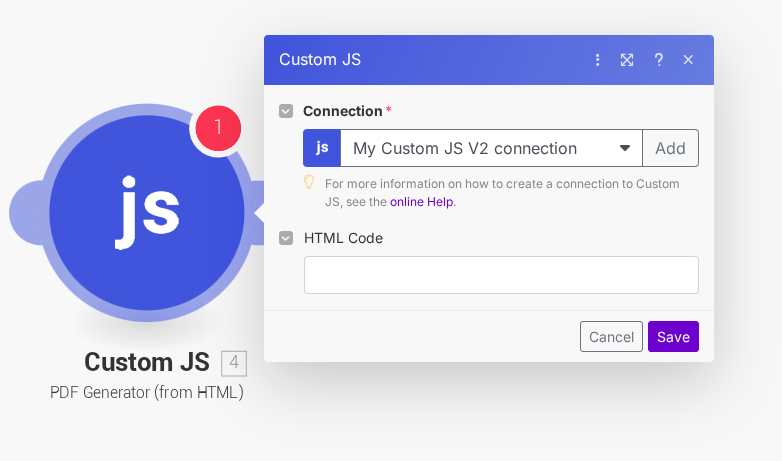
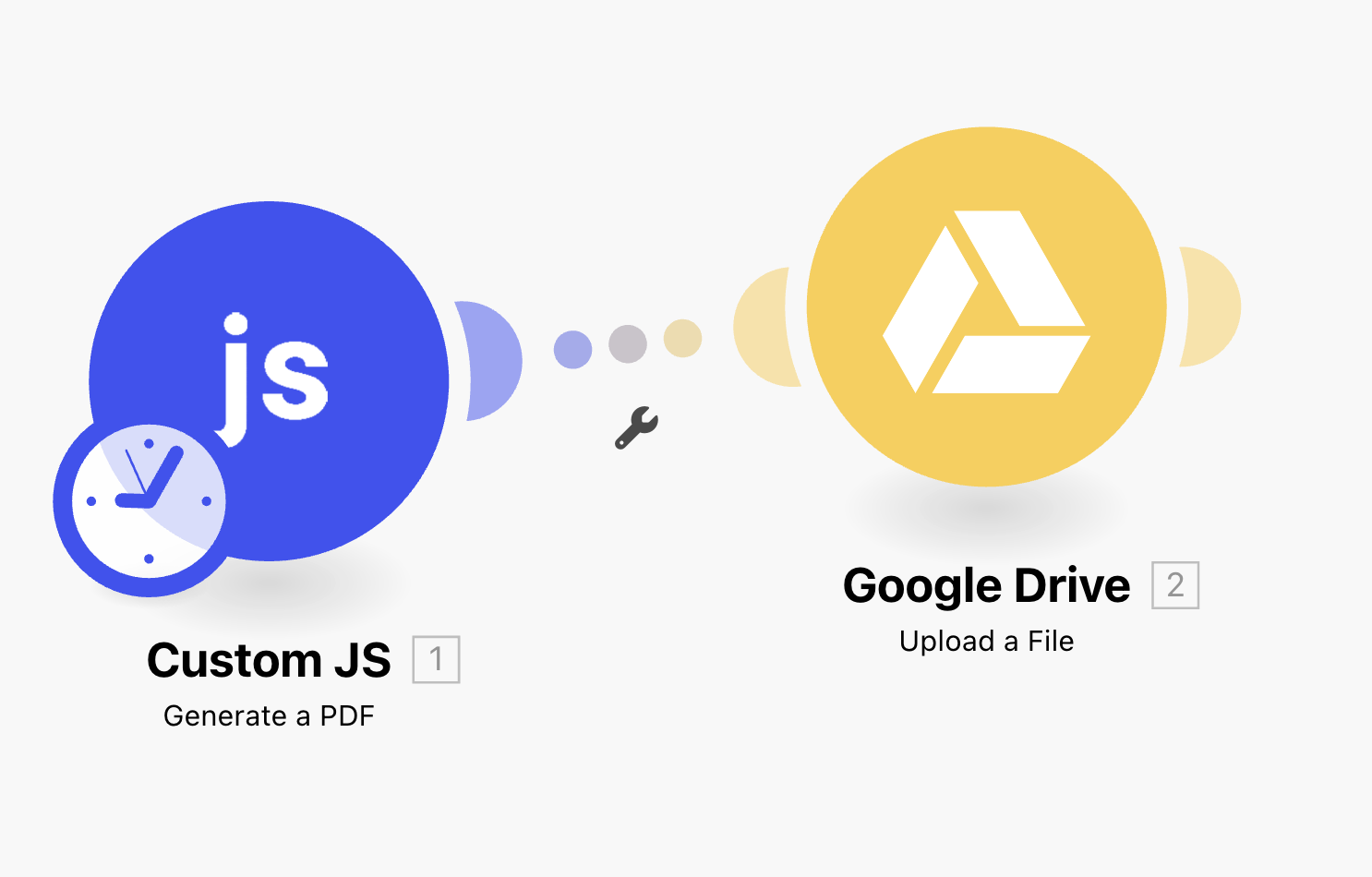
CustomJS provides powerful PDF generation capabilities that allow you to create professional PDF documents directly from your Make.com workflows. You can generate PDFs from HTML content, templates, or dynamic data.
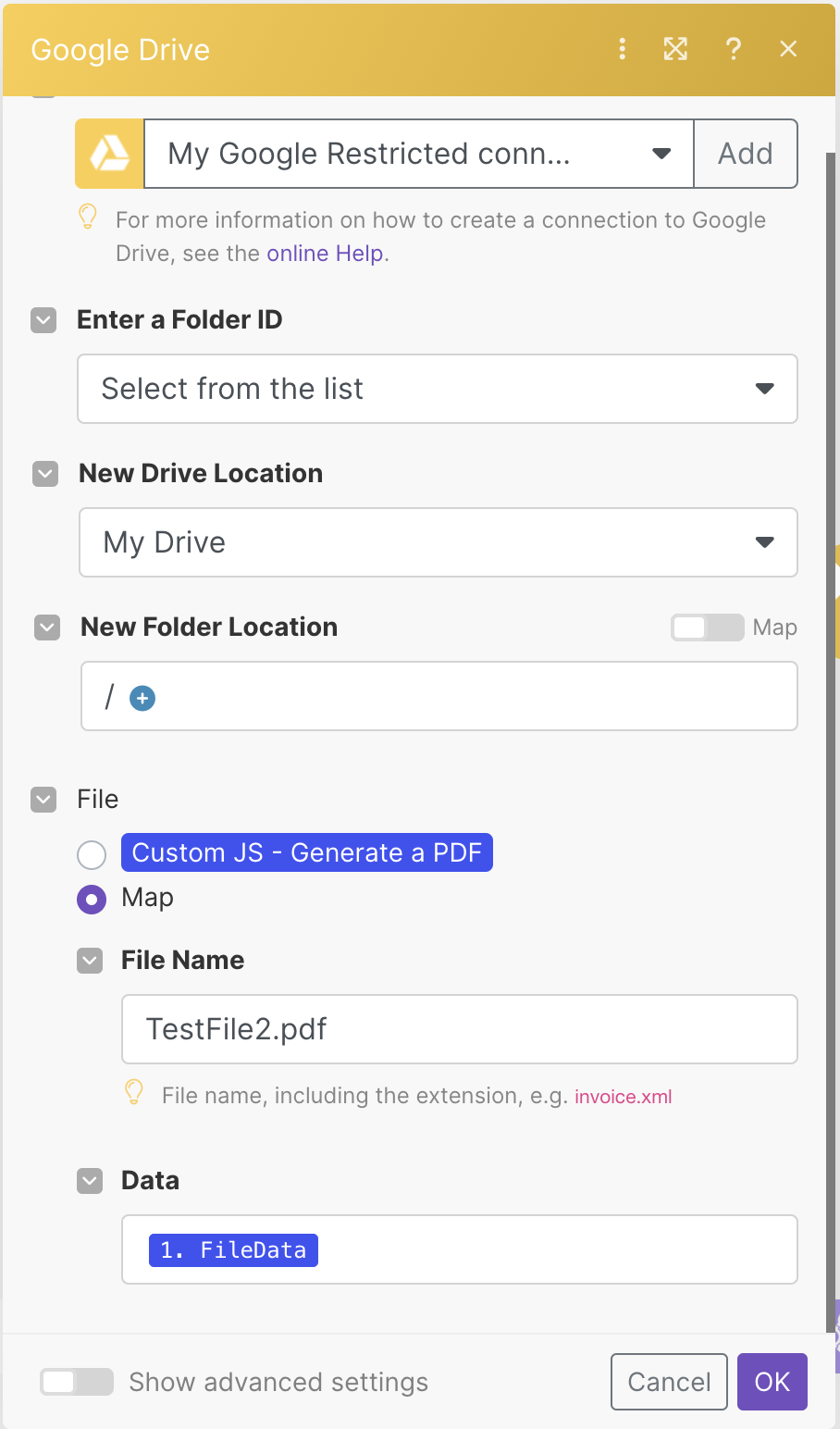
The module returns a binary file buffer that can be directly used with other Make.com modules like Google Drive, Dropbox, or email attachments.
You can directly access input field values using the 'input' JavaScript variable, or construct JSON objects for complex cases, as detailed in our JSON Parameter guide.
When using asynchronous JavaScript (QR codes, charts, API calls), you must signal when your content is ready by setting window.__RENDER_DONE__ = true. The PDF generator waits for this flag before capturing the page.
<script type="module">
  import QRCode from 'https://cdn.jsdelivr.net/npm/[email protected]/+esm';

  // Initialize as false
  window.__RENDER_DONE__ = false;

  async function generateQR() {
    // Your async operations
    const qrDataUrl = await QRCode.toDataURL('https://example.com');
    document.getElementById('qr').src = qrDataUrl;

    // Signal that rendering is complete
    window.__RENDER_DONE__ = true;
  }

  // Start generation
  if (document.readyState === 'loading') {
    document.addEventListener('DOMContentLoaded', generateQR);
  } else {
    generateQR();
  }
</script>
⚠️ Important: Without setting window.__RENDER_DONE__ = true, your PDF may be blank or incomplete because the generator won't wait for async operations to finish!
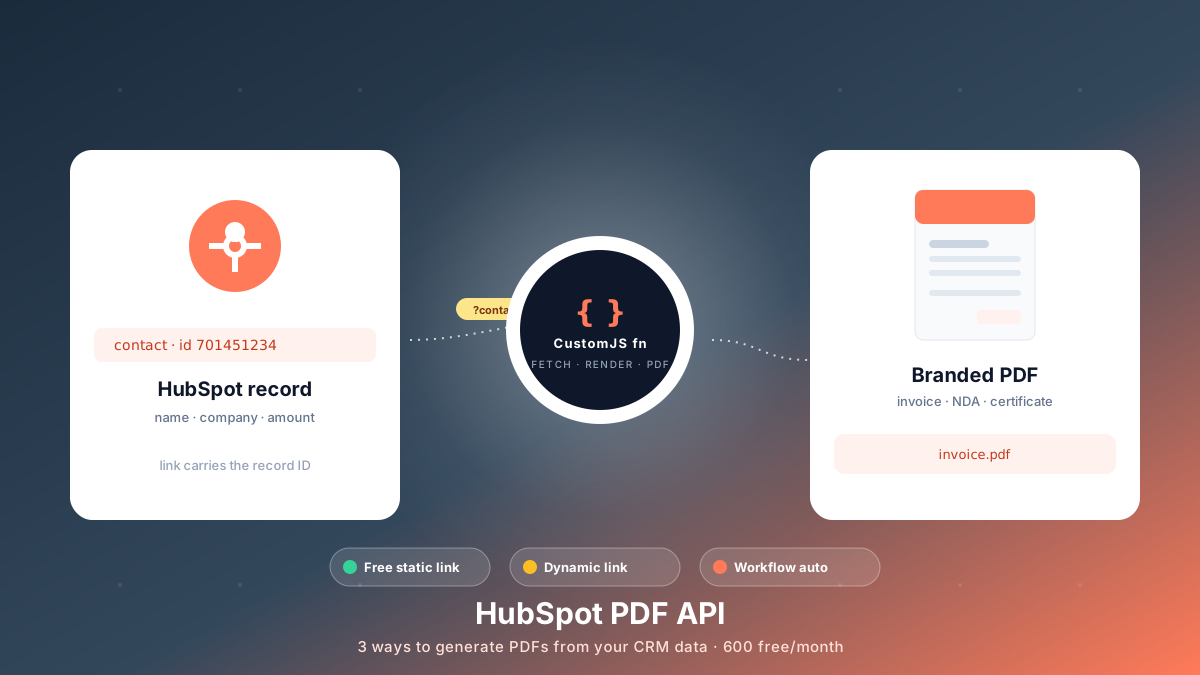
Generate branded PDFs - invoices, NDAs, quotes, certificates - straight from HubSpot data. Three approaches, from a free no-code link to fully automated workflows. 600 free PDFs/month.
Generate professional PDFs in Power Automate with CustomJS. Create invoices, receipts, reports, and certificates with custom HTML templates, QR codes, and advanced formatting. No Azure Functions required.