Screenshot API Comparison: Puppeteer vs Playwright vs CustomJS (2026)
If you need to generate website screenshots for previews, monitoring, QA, or automation workflows, you’ll quickly end up comparing three approaches: Puppeteer, Playwright, or a managed Screenshot API (like CustomJS).
They can all produce high-quality images, but they differ massively in operational overhead, scaling, reliability in CI, and total cost of ownership.
In this guide, you’ll get a practical comparison with copy-paste code examples, a feature matrix, and a “what to choose” decision framework.
TL;DR
Puppeteer is great for Chrome-only automation when you can manage infra and updates yourself.
Playwright is usually the best choice for multi-browser automation (Chromium, Firefox, WebKit) with solid tooling.
CustomJS Screenshot API is the fastest way to ship screenshot generation without maintaining browsers, workers, or scaling logic.
If you need Make.com / n8n automation, a managed API with native modules wins immediately.
If you need consistent results in CI/CD and predictable ops, avoid running your own browser fleet unless you truly need it.
Quick feature comparison
Feature
Puppeteer
Playwright
CustomJS Screenshot API
Setup time
Medium
Medium
Low
Infra & scaling
You run it
You run it
Managed
Browser engines
Chromium
Chromium, Firefox, WebKit
API abstraction (common screenshot use cases)
Interactive automation
Yes
Yes
Yes (commands)
No-code modules
No
No
Make.com, n8n
Best for
Chrome automation on your infra
Cross-browser testing + automation
Shipping screenshots fast, low ops
Interactive demo: build your screenshot request visually
The fastest way to avoid “it works locally but fails in CI” issues is to use a tool that makes browser actions explicit: wait conditions, cookie banner clicks, scrolling, and cropping.
Use the widget below to build a screenshot request (including interactions) and get ready-to-use API code.
Interactive Screenshot Request Builder
Try a URL that has a cookie banner. Add a click, add a wait, then crop a region.
The widget uses our Native API. For the full request/response schema and endpoint details, see Native API documentation.
Puppeteer: screenshot example
Puppeteer is a Node.js library that controls Chromium. It’s excellent when you already operate Node services and want full control, but you also inherit all responsibility: browser updates, concurrency limits, timeouts, CPU spikes, and flaky rendering.
Operational note: in real systems you usually do not launch a new browser per request. You keep a browser pool or a worker queue. That’s where complexity starts.
Playwright: screenshot example
Playwright provides a robust API, great tooling, and multi-browser automation. If you must test and screenshot with browser parity (Chromium/Firefox/WebKit), Playwright is usually the strongest self-hosted option.
With a managed API, you trade direct browser control for speed of integration and lower ops. You simply send a request with the URL and optional commands (click, type, wait, scroll, crop).
Retries & timeouts: handling flaky pages without hanging workers.
Monitoring: diagnosing why a single site started failing today.
If screenshot generation is a core competency for your business, self-hosting can be right. If it’s an enabling feature, a managed API usually wins.
Make.com and n8n: automation workflows
For many teams the screenshot itself is just a step inside an automation:
Marketing: generate social previews and upload them to storage/CDN.
QA: capture screenshots nightly and compare against baselines.
Monitoring: screenshot competitor pages and notify on changes.
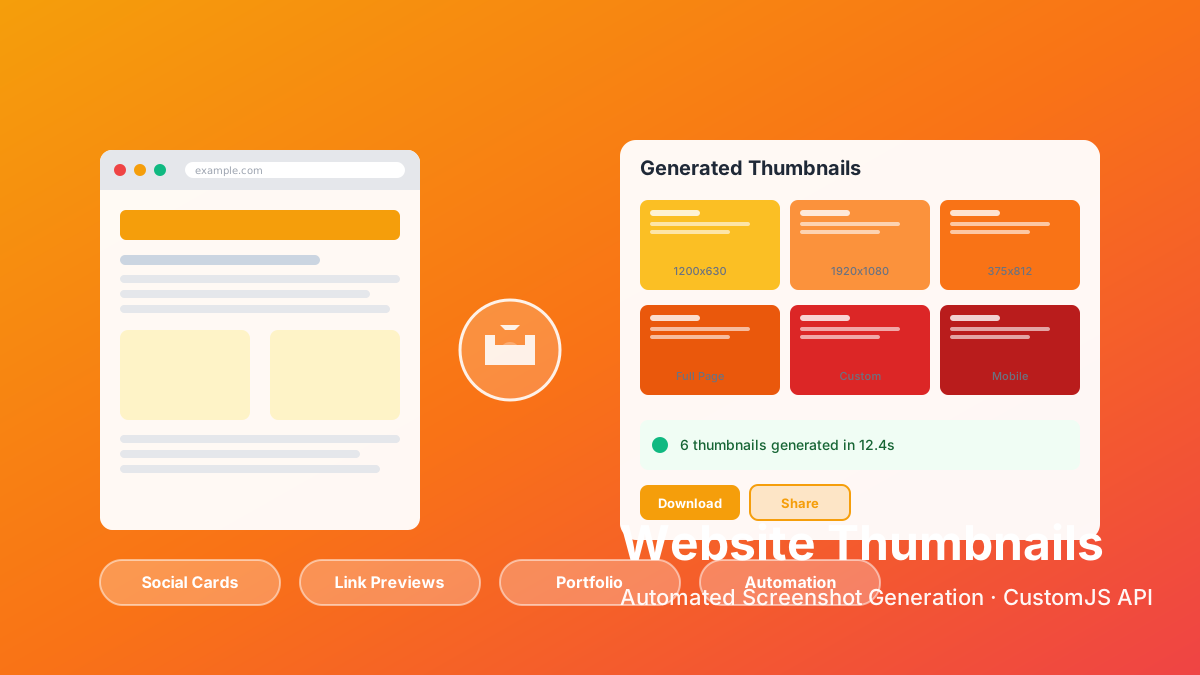
Content: generate blog thumbnails on publish.
If you’re already working in Make.com or n8n, native modules dramatically reduce setup time compared to running Node workers and managing browser containers.
Decision guide: what should you pick?
Choose Puppeteer if…
You only need Chromium and you already operate Node services.
You need very custom behavior and want direct browser hooks.
You can invest in infra and long-term maintenance.
Choose Playwright if…
You need cross-browser coverage (Chromium/Firefox/WebKit).
Your main use case is testing and automation with excellent tooling.
You can still manage browser workers and scaling.
Choose CustomJS Screenshot API if…
You want to ship screenshot generation quickly without operating browsers.
You want a visual builder that outputs correct API code for interactions.
You need Make.com and n8n modules for no-code workflows.
You want predictable costs and fewer production failures due to infra.
FAQ
1. Which is faster: Puppeteer or Playwright?
In many real-world cases the difference is negligible compared to network latency and page complexity. Choose based on browser support, reliability, and operational fit.
2. Can I handle cookie banners and popups?
Yes. With self-hosted tools you write automation steps; with CustomJS you send commands (or use the visual builder to generate them).
3. What about full-page screenshots?
All approaches support it. Be careful with long pages and lazy loading: you typically need scroll/wait strategies.
Puppeteer and Playwright are excellent tools when you want maximum control and can operate browser automation infrastructure.
If you want to ship a screenshot feature quickly—with low maintenance and easy automation via Make.com and n8n—a managed Screenshot API is usually the most pragmatic choice.
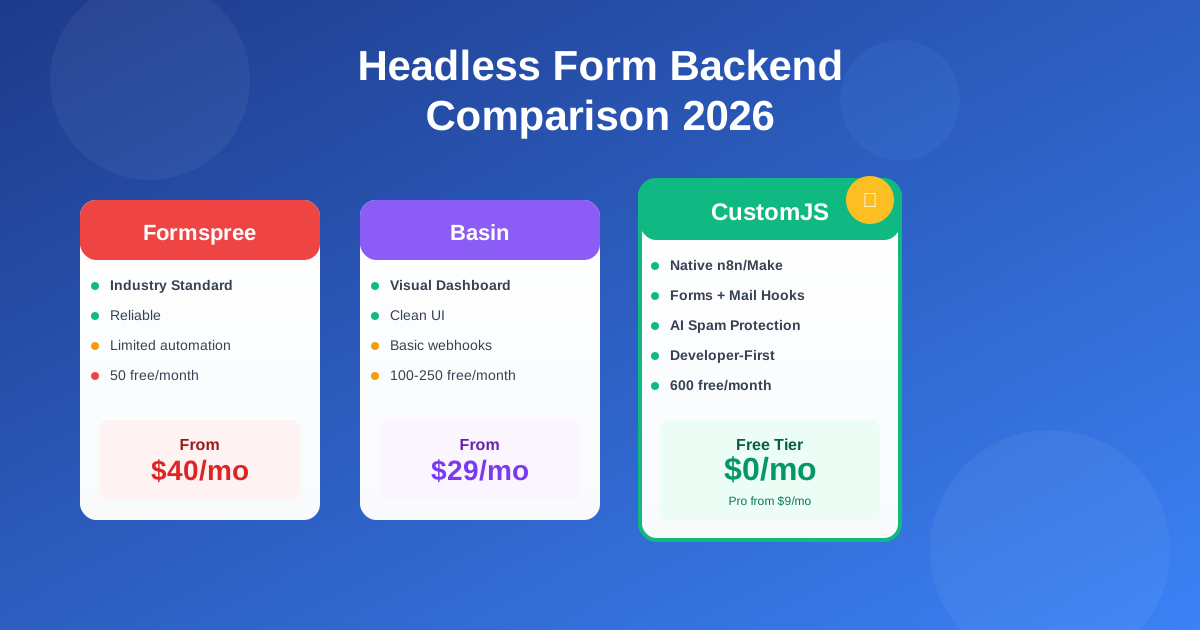
Compare the best headless form backends: Formspree vs Basin vs Getform vs CustomJS. Developer-first analysis of features, pricing, automation, and real-world performance. 600 free submissions/month.
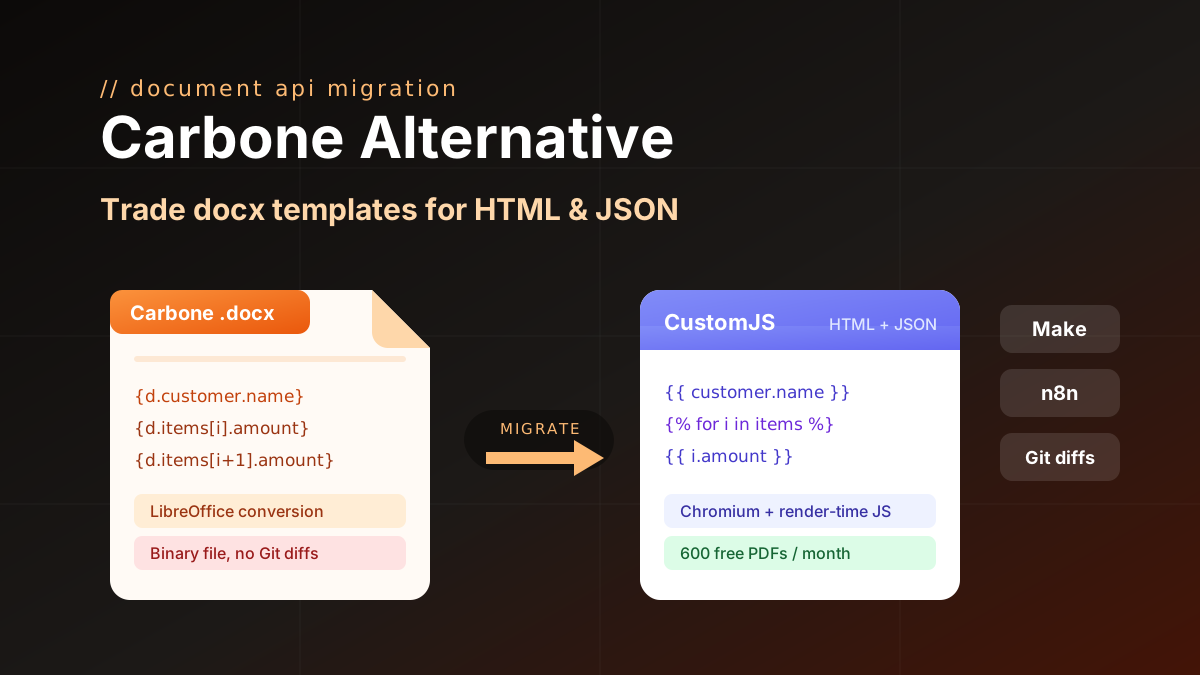
Carbone alternative compared: CustomJS vs Carbone on template model, pricing, and JS rendering, plus a docx to HTML migration guide. 600 free PDFs/month.